
Helping theaters of every size stay in business.
On The Stage is the all-in-one platform that performing arts organizations use to sell tickets, run their box office, raise money, market their shows, and report on it all. Our customers range from middle school drama programs to community houses to large professional theaters, and most of them used to run their operations on a frankensteined collection of tools that weren't actually built for theaters.
When I joined three years ago, On The Stage was a $3.2M ARR company and the customer base was mostly high schools and colleges (about 55% of revenue). The company wanted to move upmarket and start winning bigger theaters, but new midmarket customers were either canceling within months of signing or refusing to use core features of our platform because the product wasn't ready for them. The product team had two PMs, a few different roadmaps floating around, no real prioritization process (whoever screamed the loudest won), and not much of a design process either. We needed to fix the team and the product at the same time.
We did. Three years later, ARR has almost tripled and we are targeting profitability in Q4 2026. The customer mix has flipped: midmarket and enterprise theaters went from 45% of revenue to 69%. We quadrupled our midmarket customer base and built an enterprise segment from $$600k to $1.9M in ARR, with bigger deals already in the pipeline.
Ticketing
Subscriptions
Email & Social Marketing
Automation
Production Creation
Self-Serve Upgrades
Ticketing Subscriptions Email & Social Marketing Automation Production Creation Self-Serve Upgrades
Keywords
what we did (behind the scenes)
Listening to Customers
The team wasn't talking to customers in any organized way, and a lot of decisions were getting made based on the views of a few important stakeholders. We started doing regular customer interviews and UX testing, hooked Canny up to ingest every Intercom conversation and NPS response, and made customer signal a real input to the roadmap instead of a thing we'd point to on slides.
Prioritization Framework
The team had a few different roadmaps and backlogs floating around (none of them organized) and a prioritization process that mostly came down to whoever yelled the loudest. I restructured the backlogs and put a prioritization framework in place that the team actually uses.
Custom Prioritization and Roadmapping Tool
The framework we landed on didn't easily fit within any single off-the-shelf tool, so I built a custom product within a week. It integrates with Jira and Canny, lets us prioritize customer requests alongside our own feature ideas in a single view, and runs the exact process the team committed to. This is the project I'm most proud of from my time here.
Sprint Overhaul
There wasn't much of a design process when I joined, and not much design talent on the team either. We upleveled the team, added reviews and signoffs at the right gates, and made sure design was in the conversation from day one instead of bolted on at the end. QA wasn’t a part of the process, either. We moved QA into the engineering workflow, so the entire team of engineers own the quality of what they ship.
Mixpanel and Optimizely
We adopted Mixpanel so we could see how users were actually behaving in the product, and Optimizely so we could A/B test the changes we wanted to make. We stopped guessing.
Claude
Engineers used to spend a lot of time answering "wait, how does this feature work again?" questions from PMs and AMs. We use Claude to answer those questions ourselves now (and to scope feasibility of new ideas before they hit the backlog), which means devs get to spend their time actually building.
a small sample of what we built for our customers
Ticketing Widget Overhaul
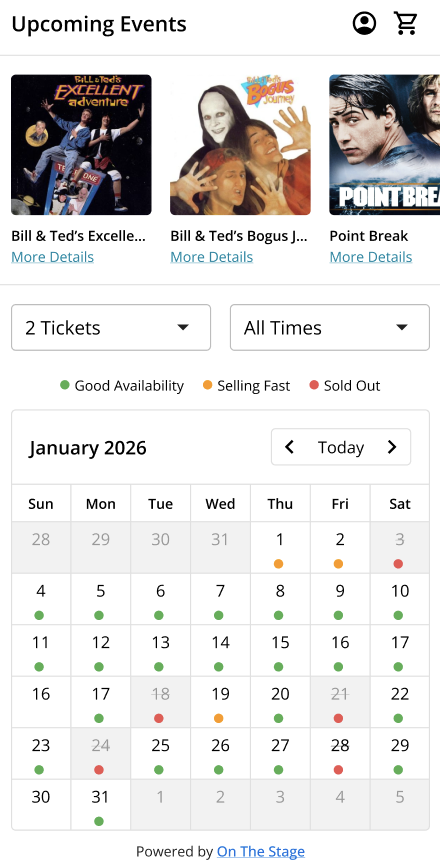
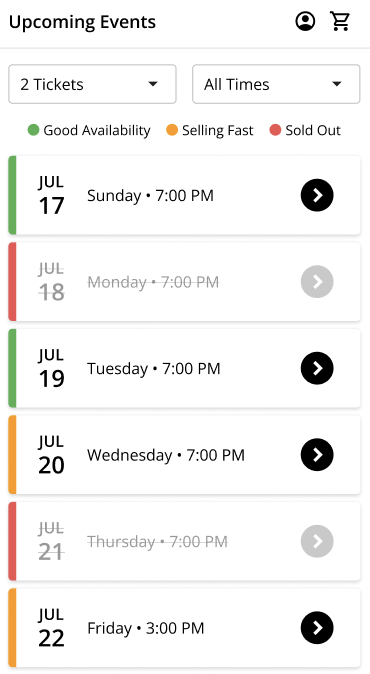
The widget is the front door of every patron’s experience. Every dollar that flows through the platform flows through it. We rebuilt it from the ground up, reduced the number of clicks to buy a ticket from 14 down to 7 (better than any of our competitors), and lifted conversion by 14%. This new experience led to a 4x increase in midmarket customers, and allowed us to sign 3 enterprise customers each with over $500k ARR.
Dashboard Overhaul
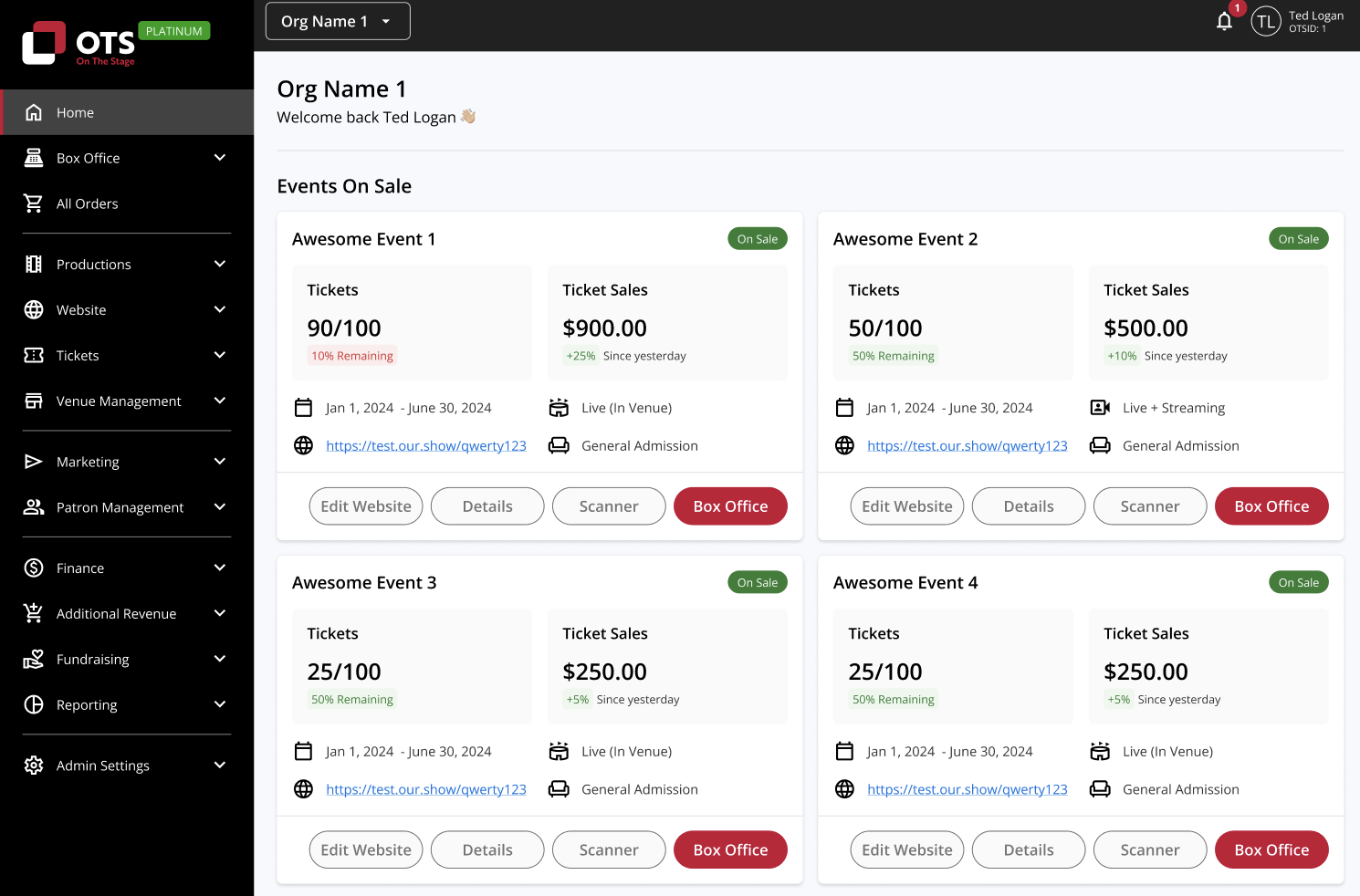
If the ticketing widget is the front door for patrons, the dashboard is the front door for our customers, and most of them were spending their time lost in it. They couldn't find half the features they were paying for, the productions they were actively running weren't front and center, and the box office (which they use every single day to actually run a show) was incredibly hard to use. On top of all of that, more and more of our customers were trying to do this on their phones, but the platform wasn't built for mobile.
We rebuilt the dashboard from the ground up, surfaced the right productions and tools at the top, redesigned the box office around the actual flow of running a show, and made the whole thing work on a phone.
In-Platform Email Marketing
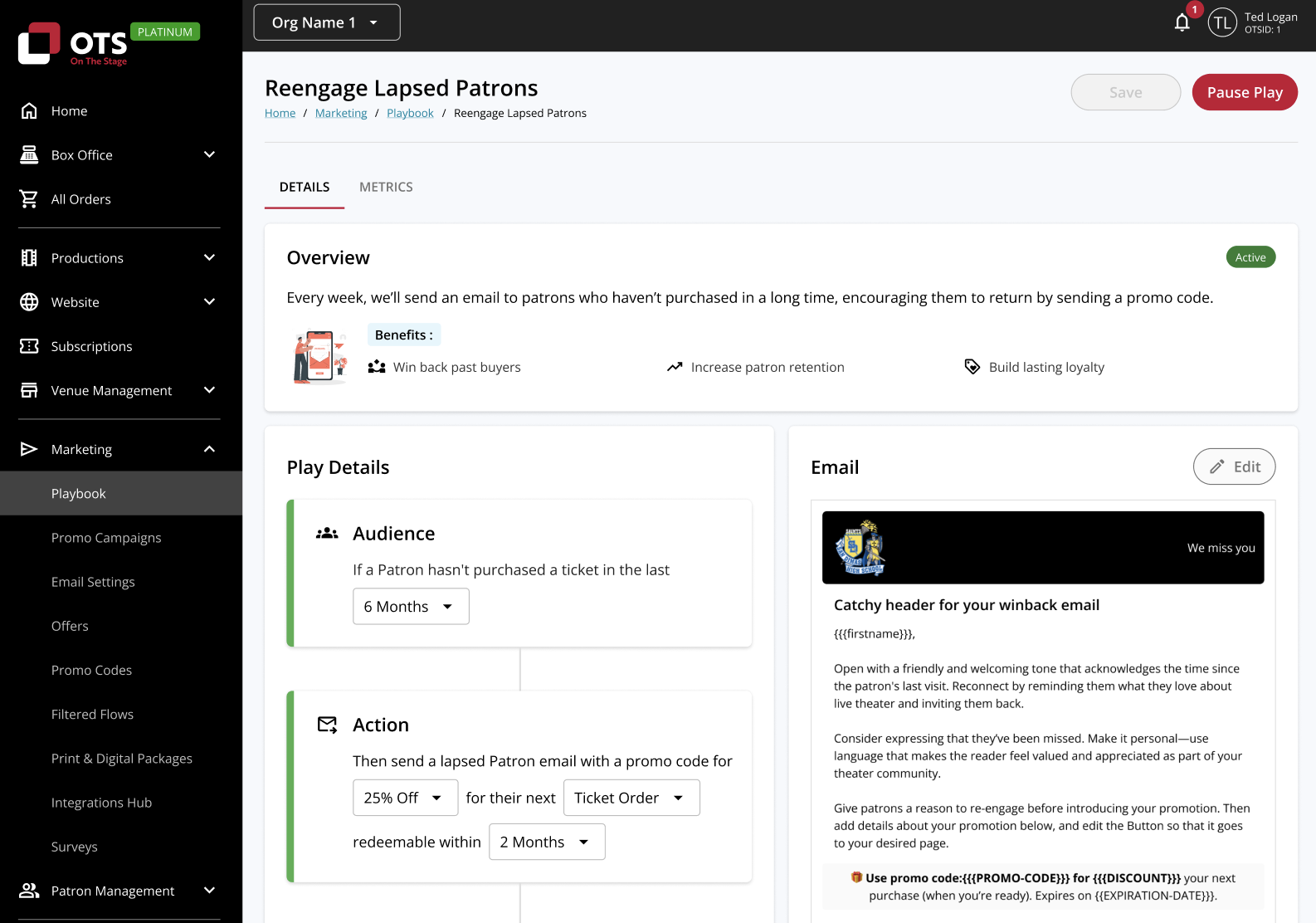
A lot of our customers were paying for a separate email tool to market their shows, and most of them didn't have the time or experience to run real campaigns. We built our own email platform inside OTS and added automated campaigns that target the right patron segments at the right times. 26% of customers have adopted with a 3.6% conversion rate on emails. For theaters that didn't have a marketing channel before, that's a meaningful amount of incremental revenue.
Production Creation
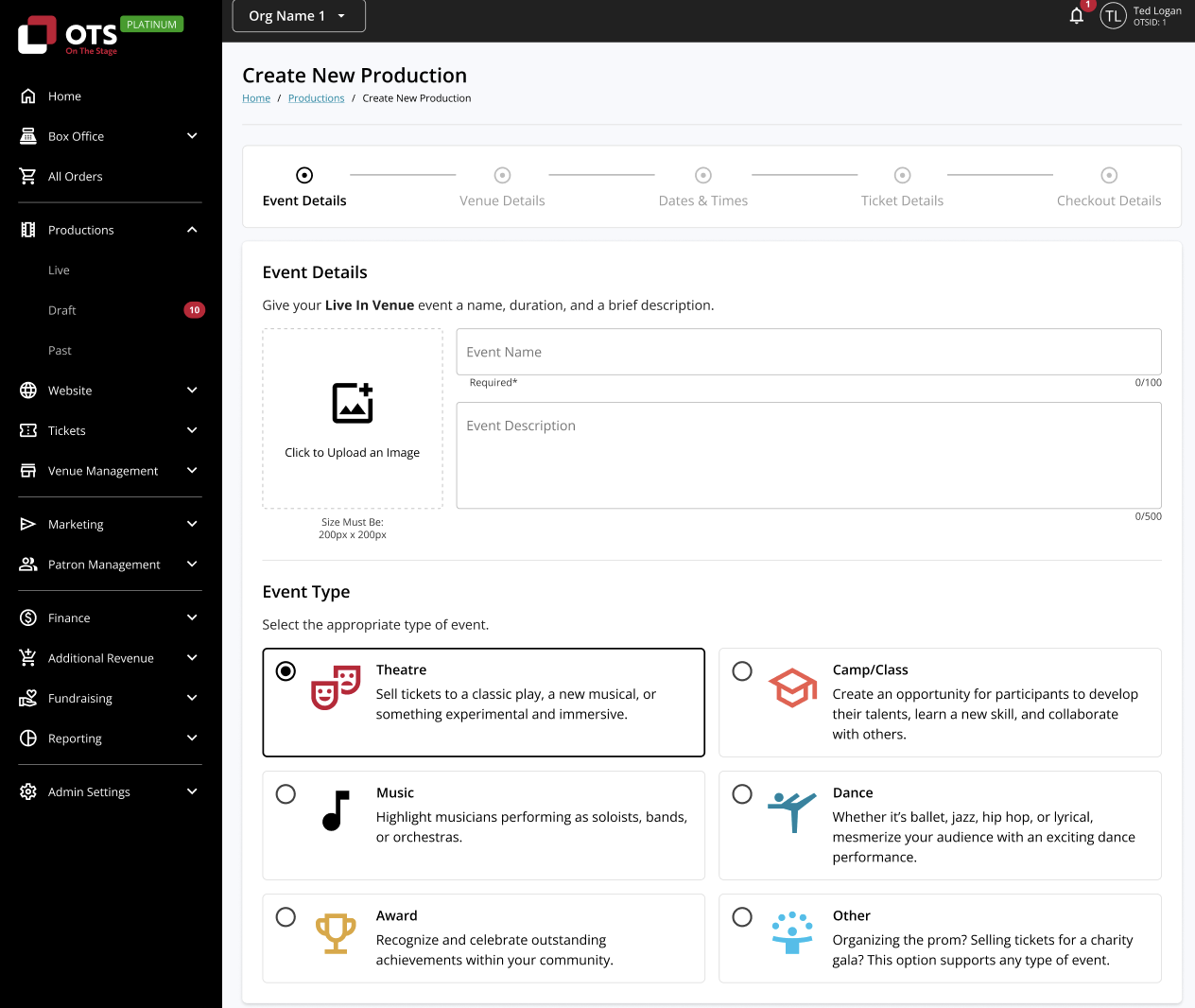
Setting up a new production used to take an operator about 12 minutes. We cut it to about 6. This was the biggest "why am I paying for this" complaint we'd hear from new customers in their first week, and we stopped hearing about it (but started hearing about other issues).
Self-Serve Upgrades
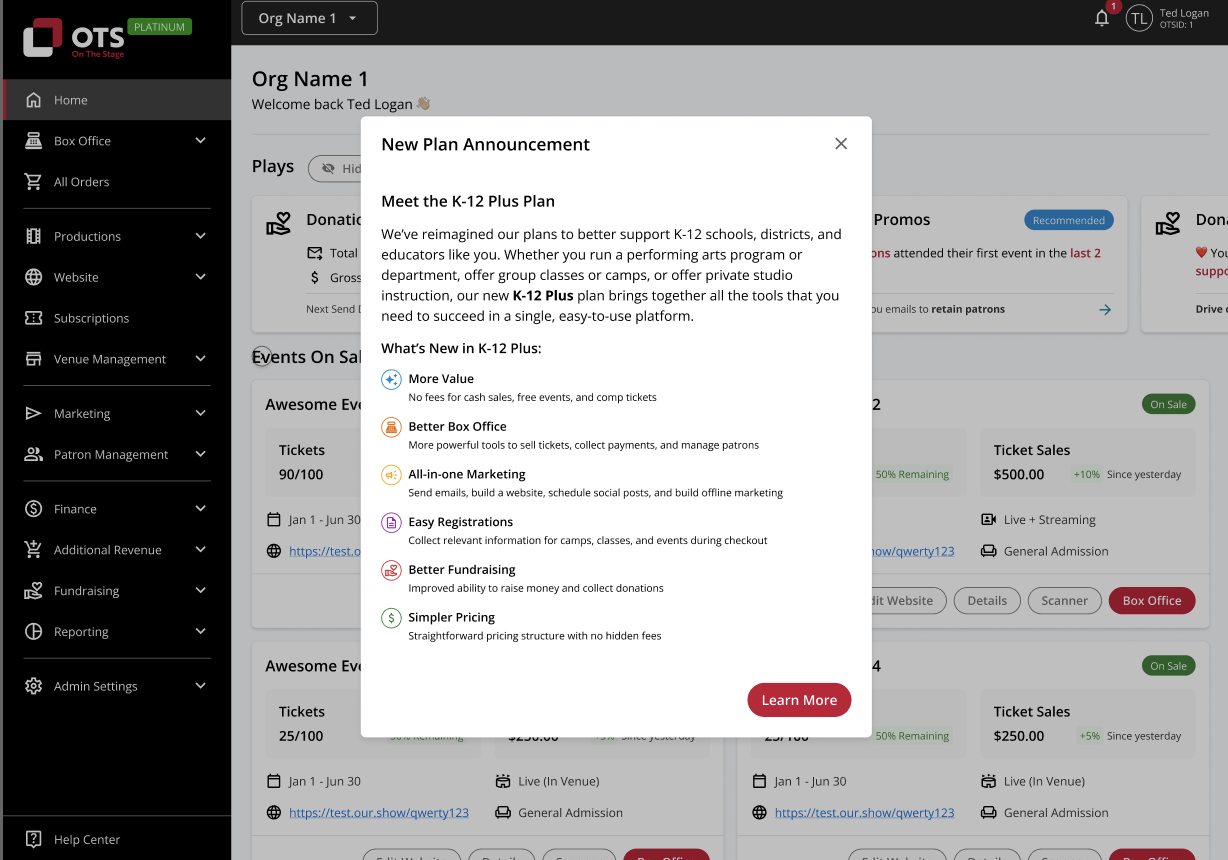
We been building features that make customers want to upgrade, but customers would be forced to reach out to their AMs to start the process. We made it possible for customers to upgrade themselves from their current plan straight to our top tier (with no other upgrade path). 17% of customers have taken us up on it, including 11% of customers on our Basic tier (resulting in a 106% increase in ARR). Our AMs had never bothered to upsell our Basic customers because they assumed those customers would never go for it, but we learned that our assumptions were not accurate.
Subscription Purchase & Redemption
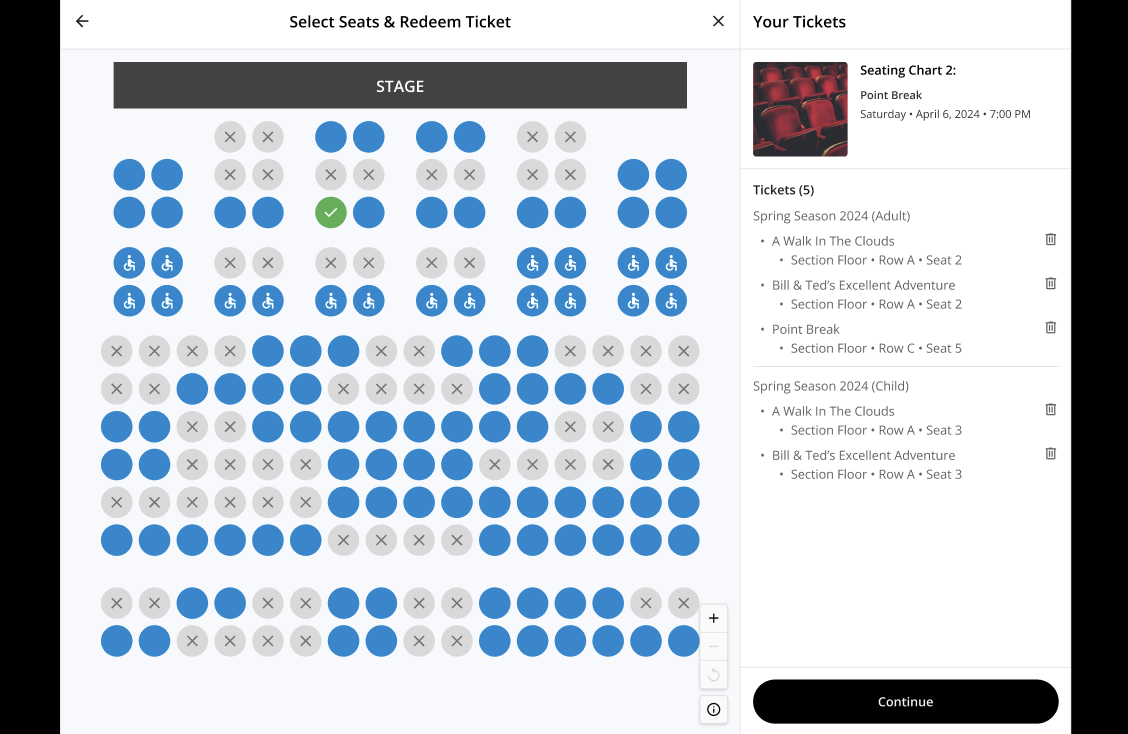
Subscription buyers used to spend forever bouncing around before locking in their seats. Only 45% of them finished seat selection on the first pass, which meant a long tail of half-completed flows and a lot of patrons who never locked in their seats or received the full value for their purchase. We reworked the experience and got first-pass seat selection up to 92%, which resulted in a 13% increase in subscription retention.
Result
When I joined, On The Stage was a $3.2M ARR company serving mostly high schools and colleges, plus 171 midmarket customers and a single enterprise customer. Three years later, the picture looks pretty different:
ARR: $3.2M → $8.3M. The company is now targeting $11.4M and profitability in Q4 2026.
Mid-market: 171 → 341 customers (+99%). Revenue per midmarket customer climbed from $7.1K to $8.2K, and total midmarket revenue grew 133% (from $1.21M to $2.8M). Retention in this segment is strong.
Enterprise: $600k → $1.9M ARR, with bigger deals lined up to nearly double the segment again in 2026.
Average new deal size is now about 2x what we forecasted, which is the clearest signal we've got that the upmarket pivot is real.
More importantly, the product is one the team is proud to ship, and customers are using more of it.