01A deck that never goes bland
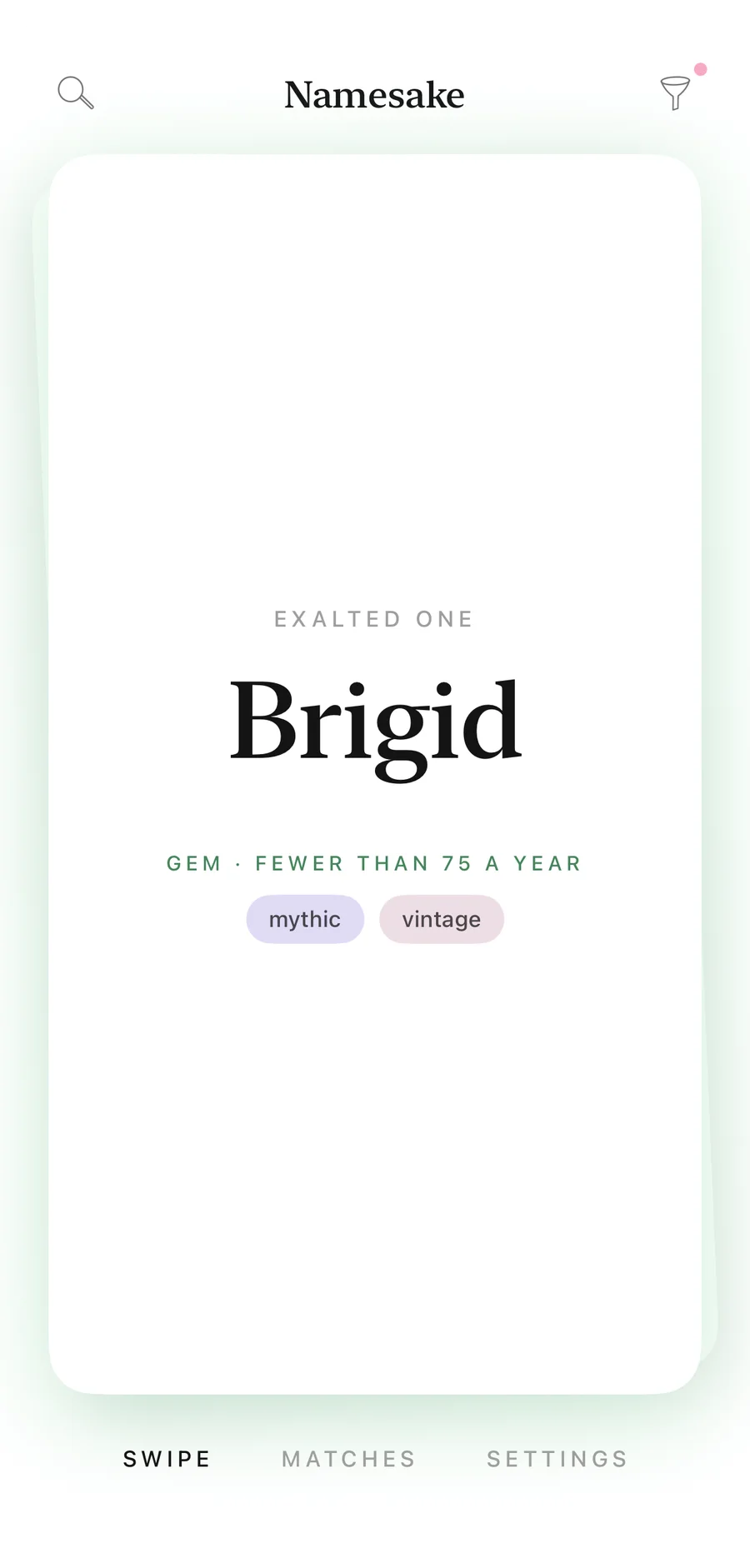
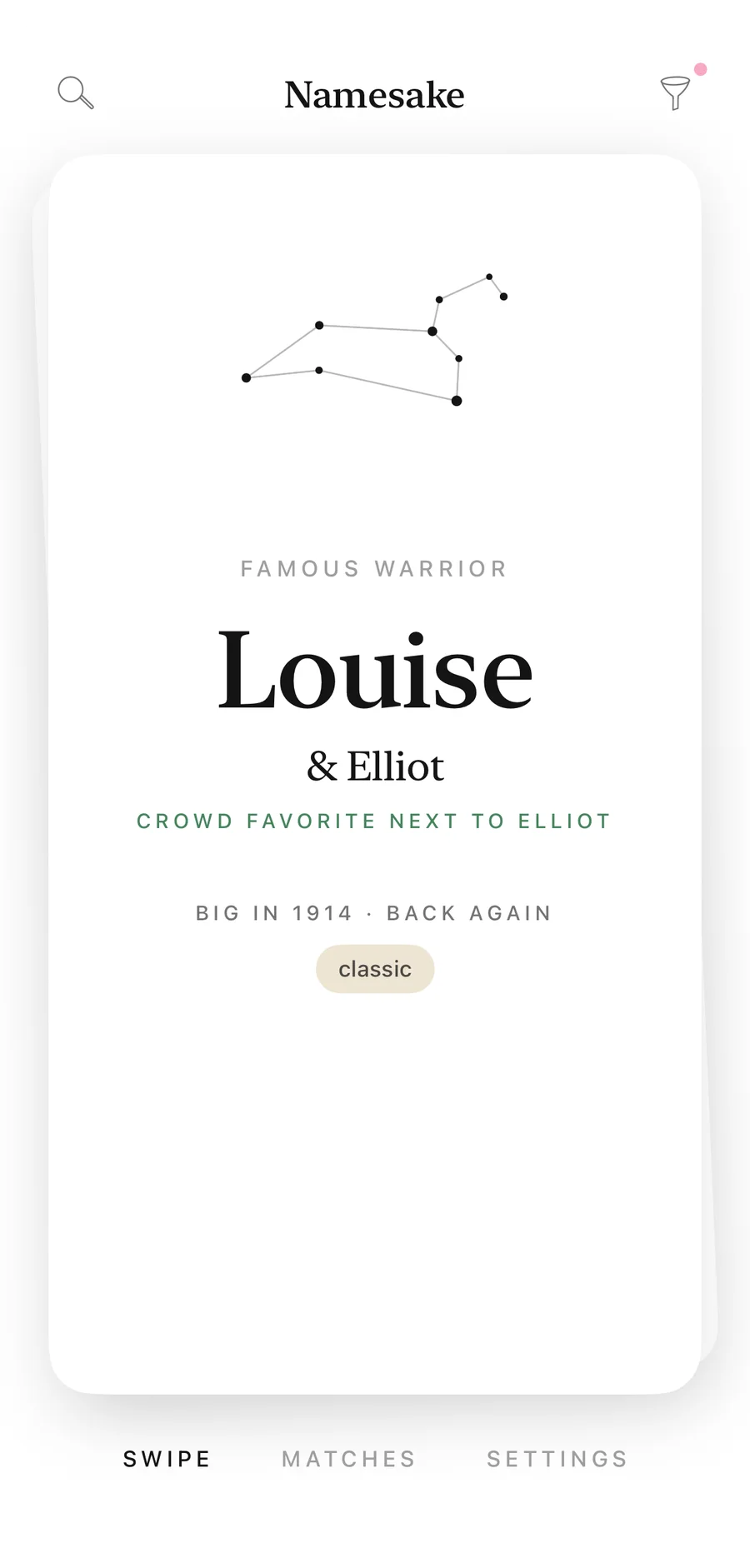
Other apps show one popular name after another. Namesake mixes rare gems and star-sign picks in with today’s favorites, and keeps names that sound alike apart, so swiping stays interesting.
How we evolved
The apps we tried were designed to make money off us, not to help us decide. Free ones hit paywalls within days, and even the paid ones did nothing to help us narrow things down.
So I interviewed eight sets of parents, from friends and family to friends of friends. Their complaints sounded like ours: the same popular names over and over, a dry one-line definition for each, and nothing pointing them to names they’d love or that would pair well with their other kids’. And agreeing on one was harder still.
I built everything around their answers. Rare gems mix in with the classics, each card tells a witty story, and suggestions come from what thousands of Reddit parents recommend. Once two people share a few favorites, they narrow the list down as a team.
Today, 40% of paired couples have agreed on a top five. It’s helping us too, and feedback keeps shaping what I build next.
For couples choosing a name
Other apps show one popular name after another. Namesake mixes rare gems and star-sign picks in with today’s favorites, and keeps names that sound alike apart, so swiping stays interesting.
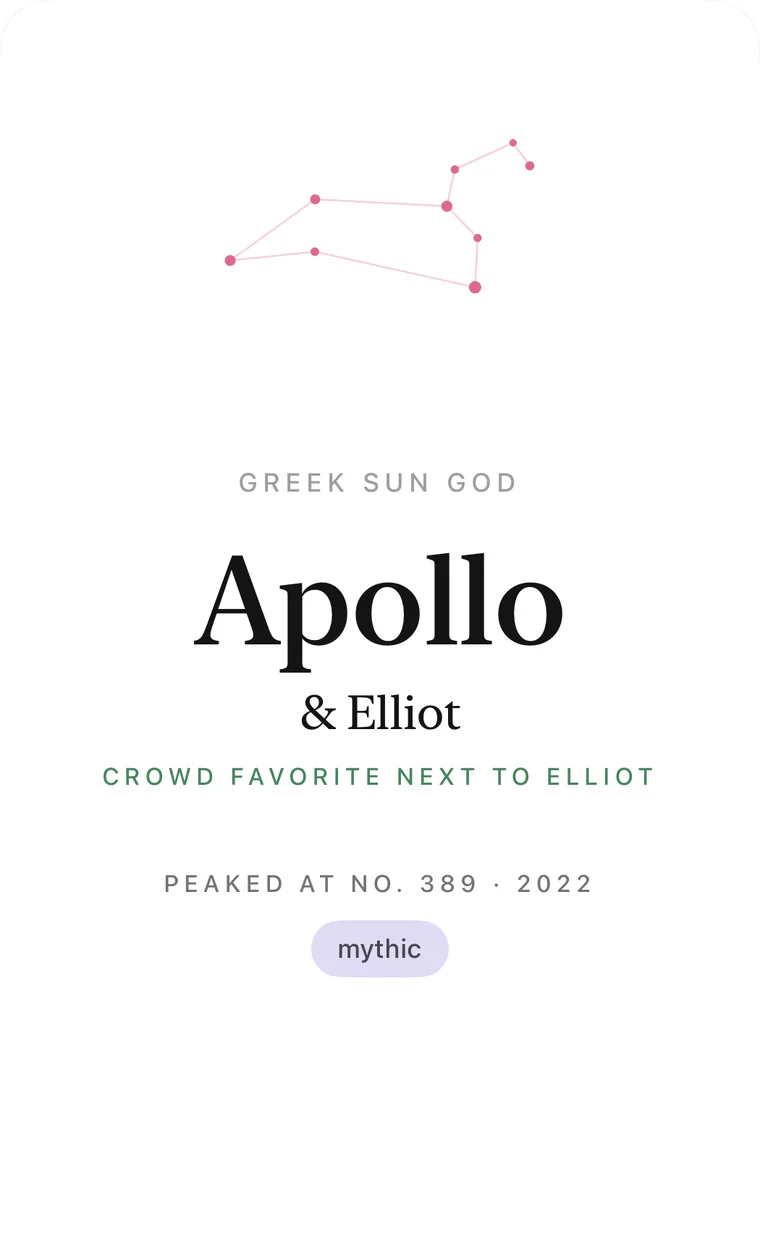
Most apps stop at a one-line textbook meaning. Flip any card and you get a witty, fact-checked line about where the name comes from, the kind of thing you want to repeat to your partner.
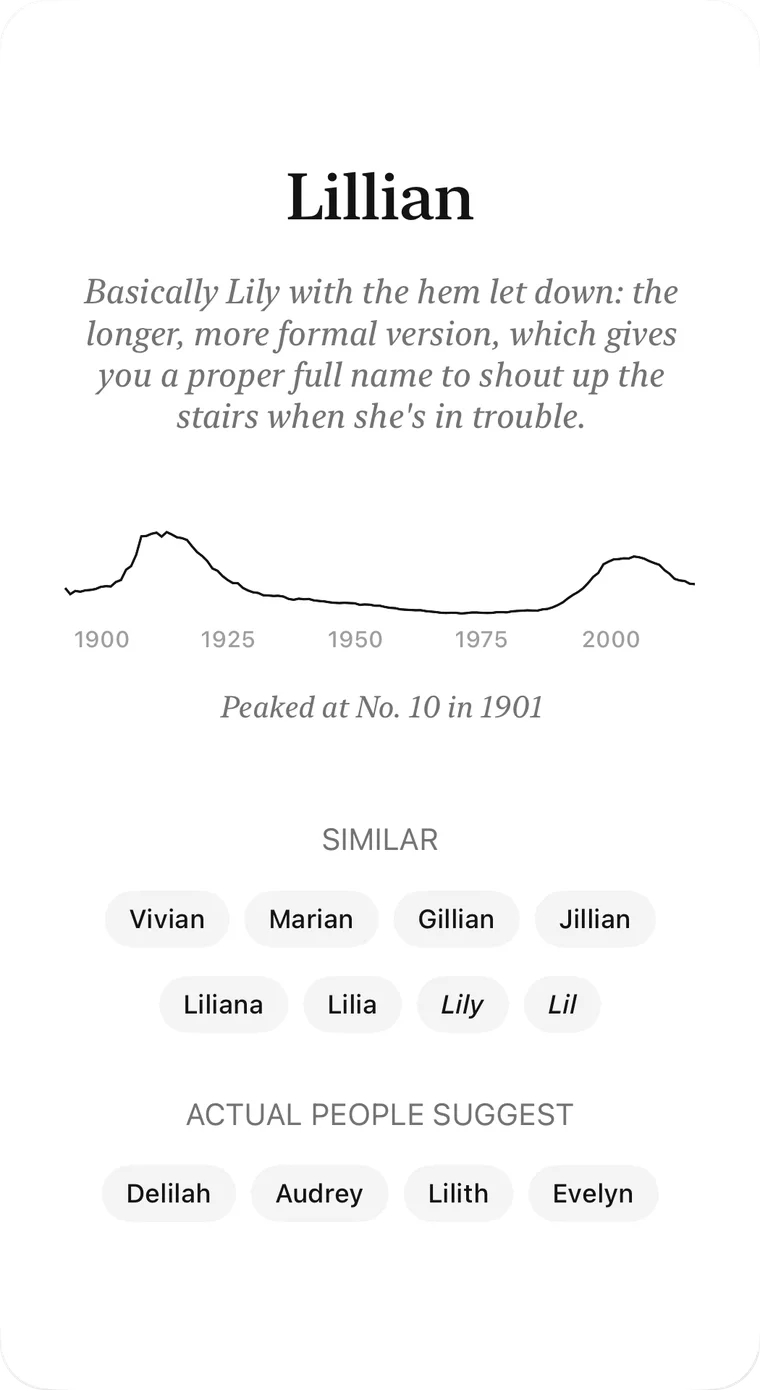
Most apps only suggest names that sound alike. Each card also shows the names real parents on Reddit recommend to people who love that name, so couples find ones they’d never have thought of.
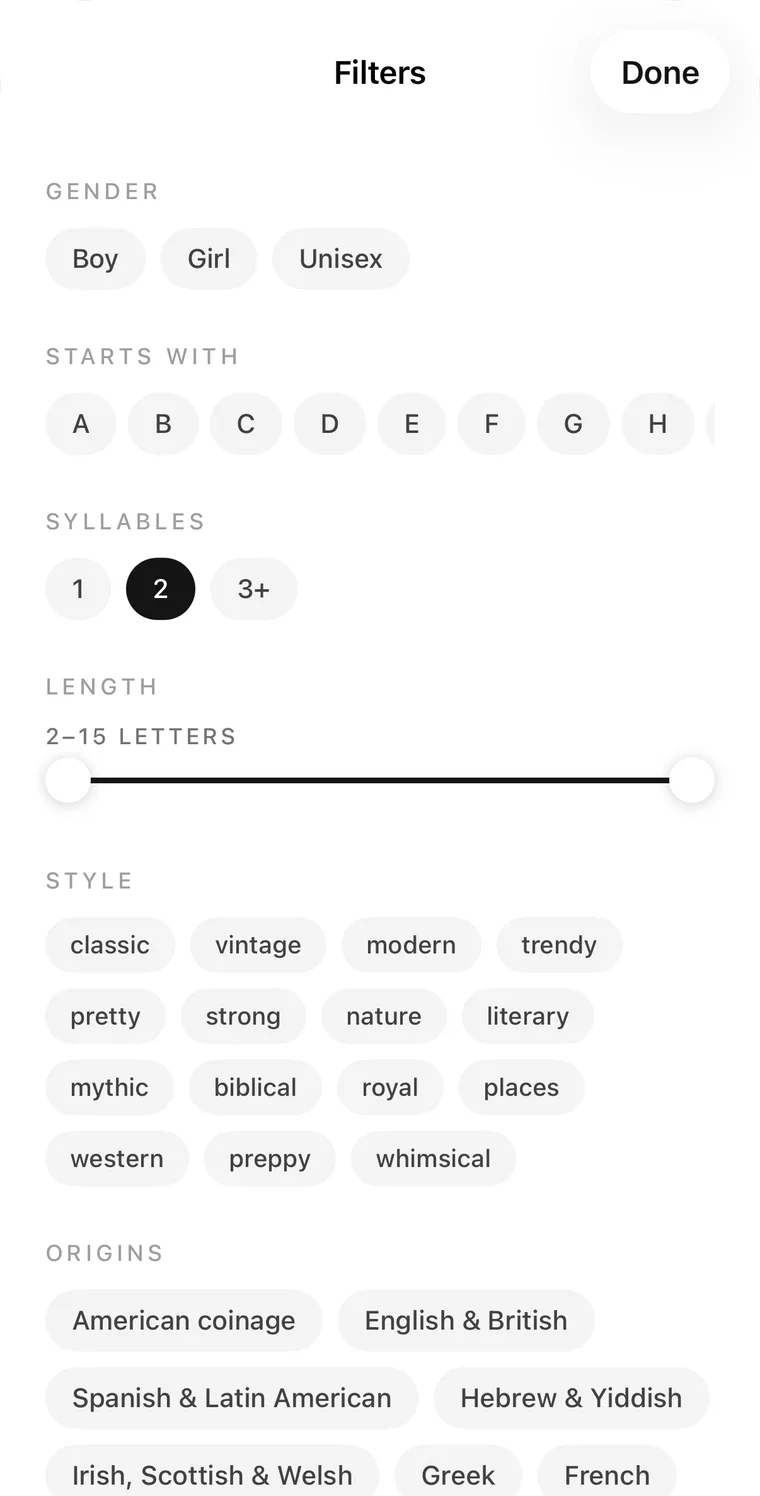
The parents I talked to wanted to filter by more than origin. Couples can narrow the deck by first letter, syllables, length, style and origin, so every card is a name that could work for them.
Parents expecting another child kept asking whether a name went with the ones they already had. Enter your kids’ names and each card shows them side by side, and also flags ones that Reddit parents kept picking as sibling pairs.
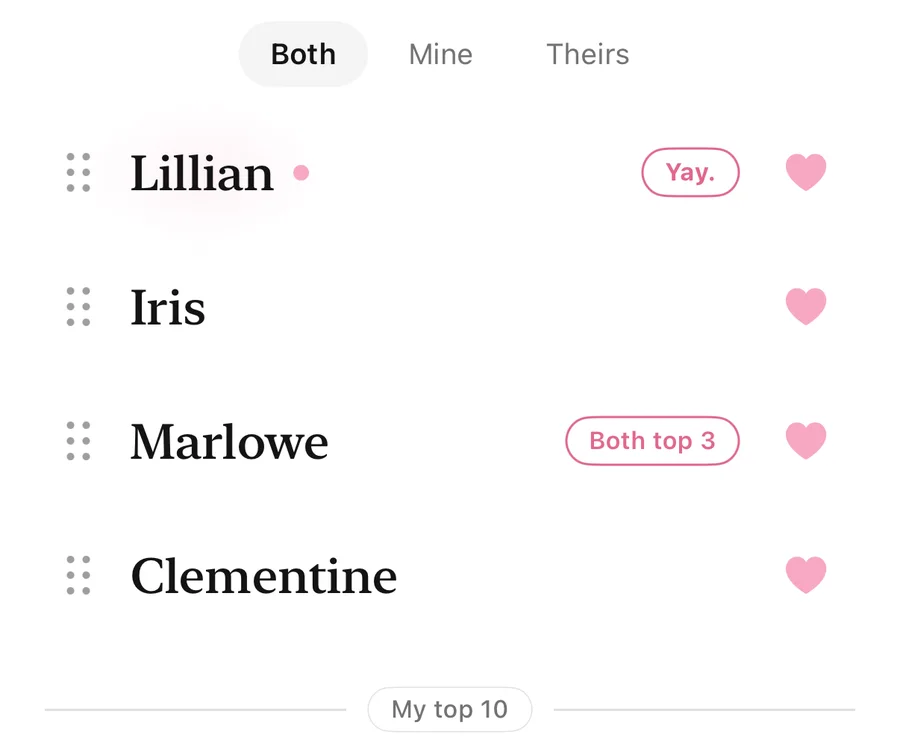
Finding names you both like is hard, and picking one is harder. Each partner ranks their own top 10, and when a name lands high on both lists it gets a pill (both top 5, both top 3, or a shared #1), so couples can see where they already agree.
Behind the scenes
I interviewed eight sets of parents about how they picked names. Lists of popular names bored them, textbook meanings told them nothing, and they wanted to know what would sound good with their other kids. Finding names they both liked was hard, but agreeing on one was even harder.
I started from the government’s record of every name given to US babies since 1880. Any name that reached the top 1,000 since 1980 made the cut. Rarer ones had to reach 75 babies in a single year, show up in at least three years and still be in use today, and an AI pass threw out misspellings while keeping real rare names. I later added names Reddit’s name lovers talk about constantly, even though few US babies get them.
I wrote rules for the order cards appear in. Each day opens on a rare gem, names your partner already liked come early, popular names lean toward today’s favorites instead of grandma names, and a gem turns up about once every seven cards. Names that sound alike are kept apart, so Kasen never follows Kason.
AI is good at sounding witty and bad at being right, so I built a system that keeps those two jobs apart. I wrote a style guide and hand-approved hundreds of lines to teach it my taste. An automatic checker sends back any line that breaks a grammar or style rule, and a second AI, which never sees the writer’s reasoning, checks every fact.
Suggestions come from two places. A rulebook decides which names truly sound alike, by rhyme and shared endings rather than shared letters. Then I mined 10 million comments from Reddit’s baby-name forum for threads asking for “names like” or “a sibling for” a name, and scored each answer by how many different people landed on it.
Matching was only half the job. Personal top 10s and a shared ranking let each couple see where their favorites overlap and narrow down to one.
Since launch in September
“It definitely makes the baby naming process more playful than overwhelming.”