01Navigation
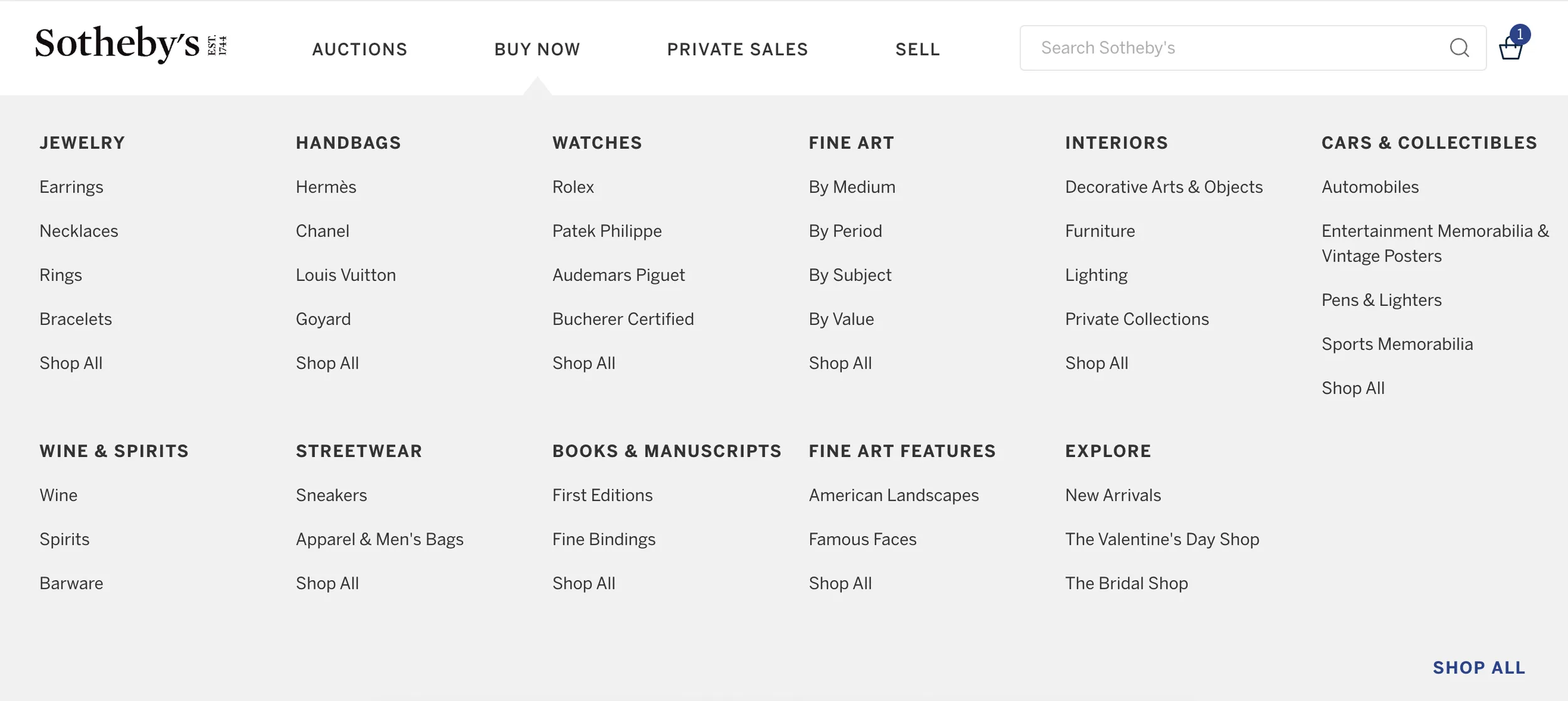
We asked users to sort Sotheby’s categories into the groups that made sense to them, then designed the menu based on their answers, so both first-time and returning buyers could find exactly what they wanted.
How we evolved
Sotheby’s held auctions only a few hours a day. Between auctions, clients had no way to buy anything, and they kept asking for one. But Sotheby’s was built entirely around bidding.
After a long debate, we decided not to keep Viyet as a separate site. We would shut it down and rebuild the store inside Sothebys.com.
We took Viyet’s core and built around it what Sotheby’s clients expected: new ways to browse and search, richer product pages, and a look as polished as the auction house itself.
Now Sotheby’s clients can shop 24 hours a day, 7 days a week.
For collectors shopping online
We asked users to sort Sotheby’s categories into the groups that made sense to them, then designed the menu based on their answers, so both first-time and returning buyers could find exactly what they wanted.
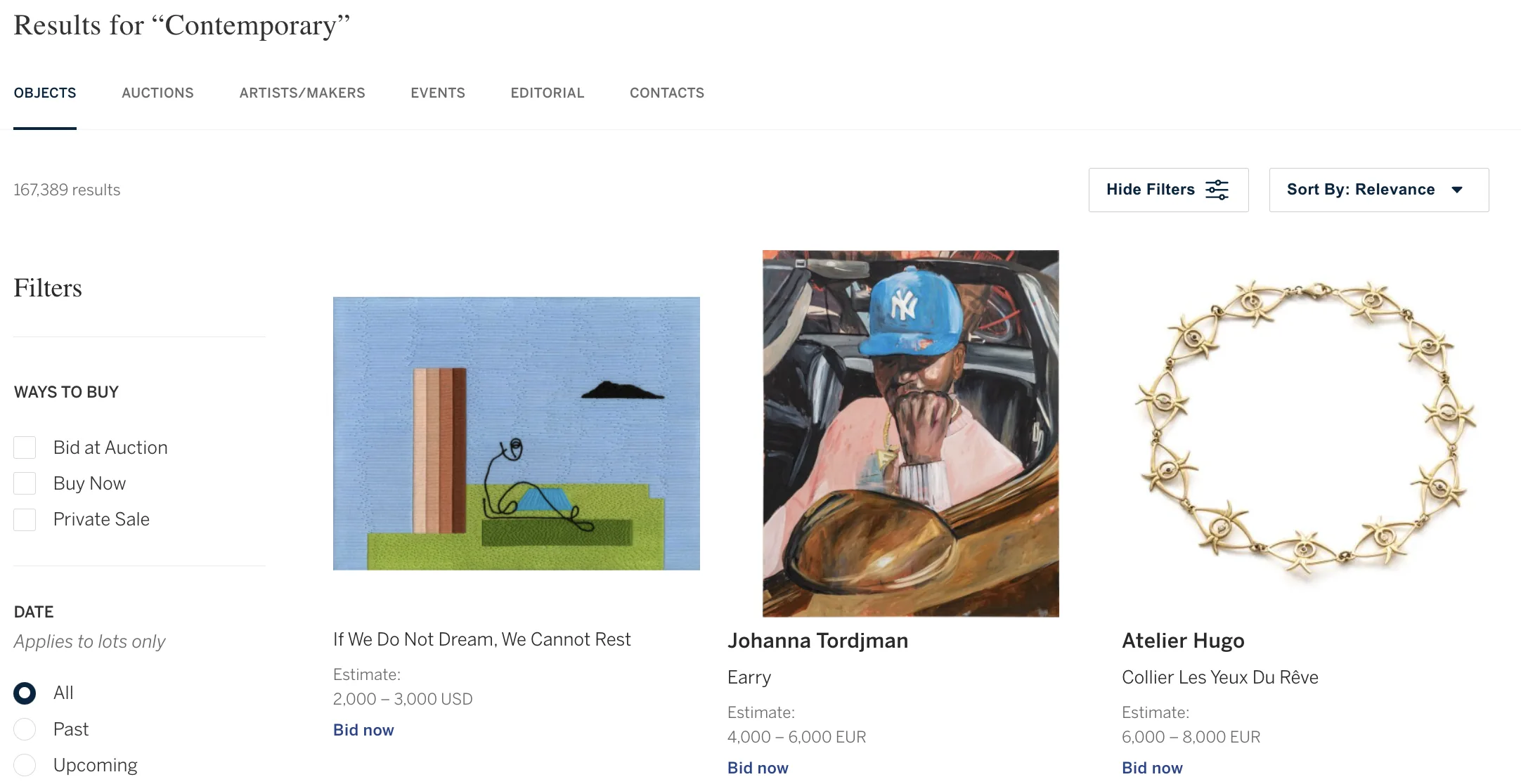
Search had to handle two new kinds of items, Buy Now and Private Sales. We redesigned the results to be easily scannable and added filters and sorting, so people could narrow a huge catalog down to what they were after.
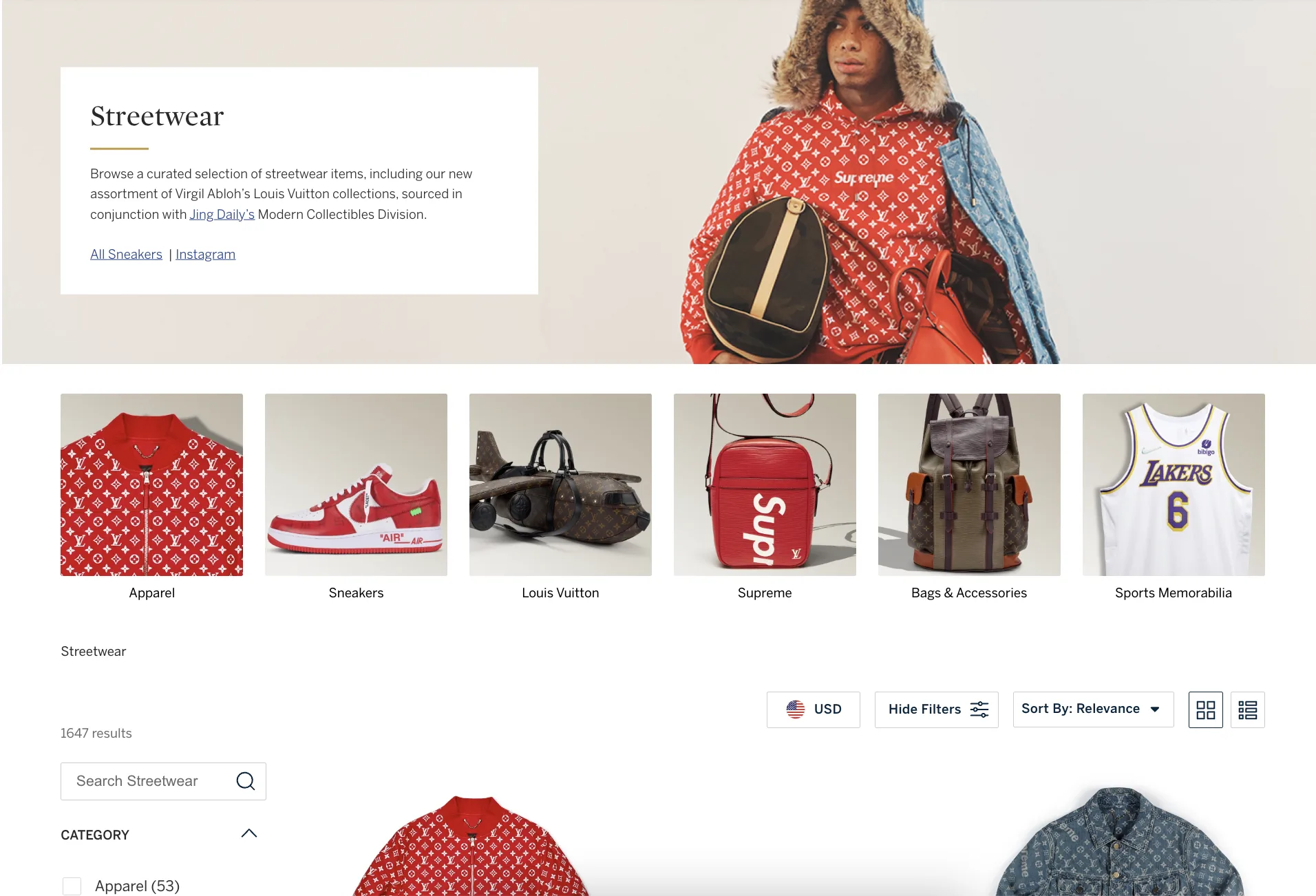
Marketing needed to put up pages like Streetwear quickly, each with its own filters and featured pieces. We gave the team a way to create those pages without waiting on engineers.
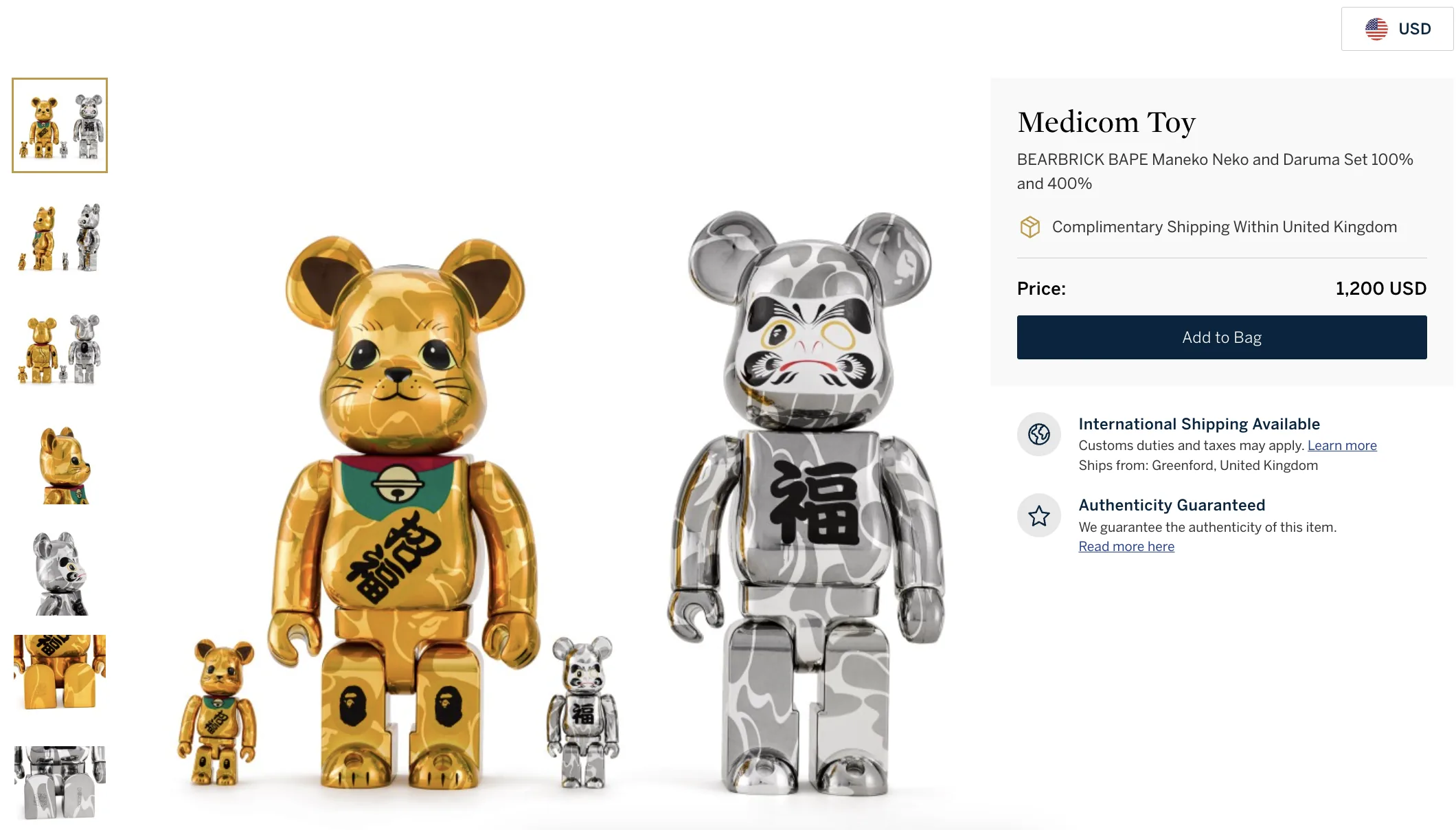
Sotheby’s auction pages couldn’t sell fixed-price items, so we built product pages from scratch, starting from Viyet’s designs. Price, shipping and an authenticity guarantee showed at a glance, and the design was meant to one day replace the auction pages too.
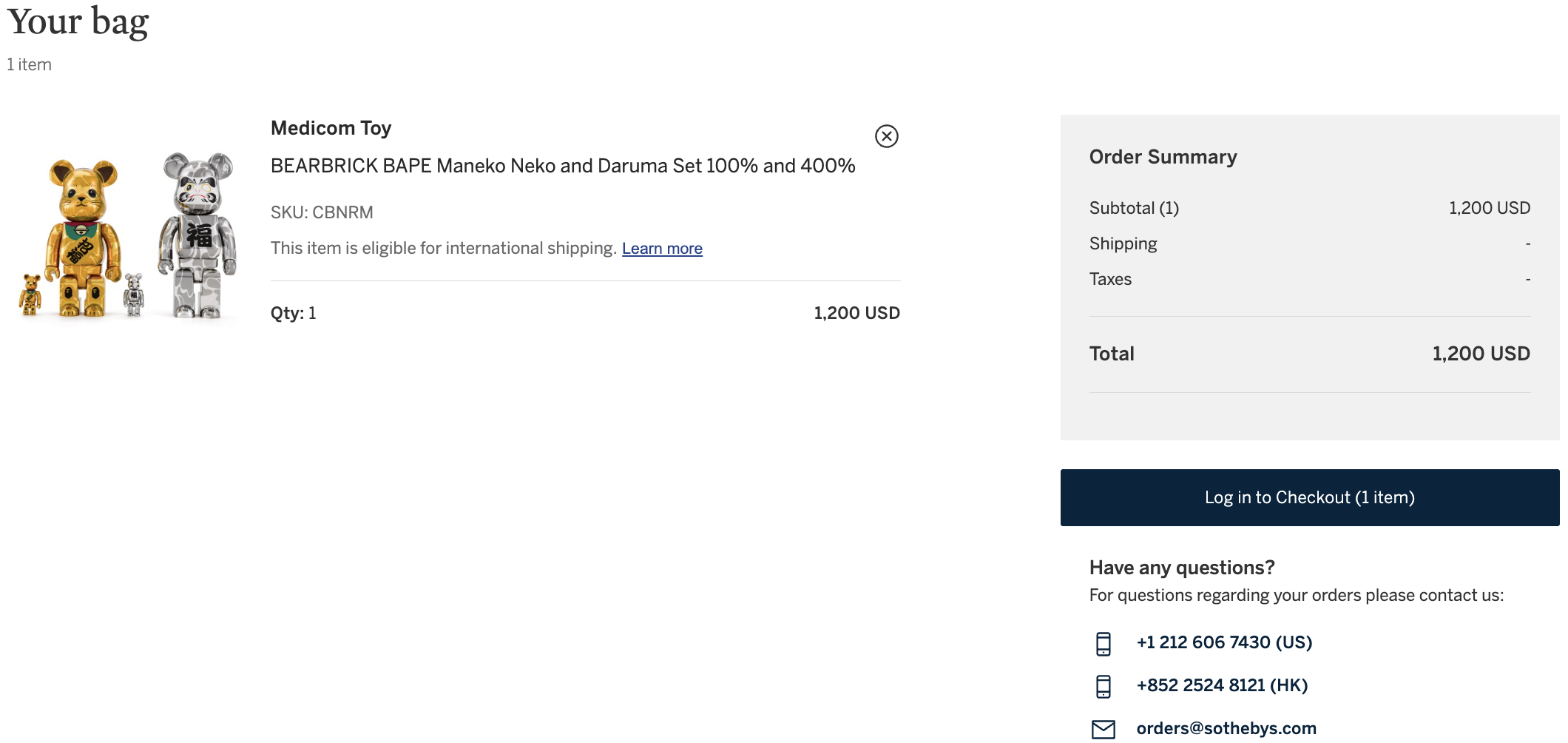
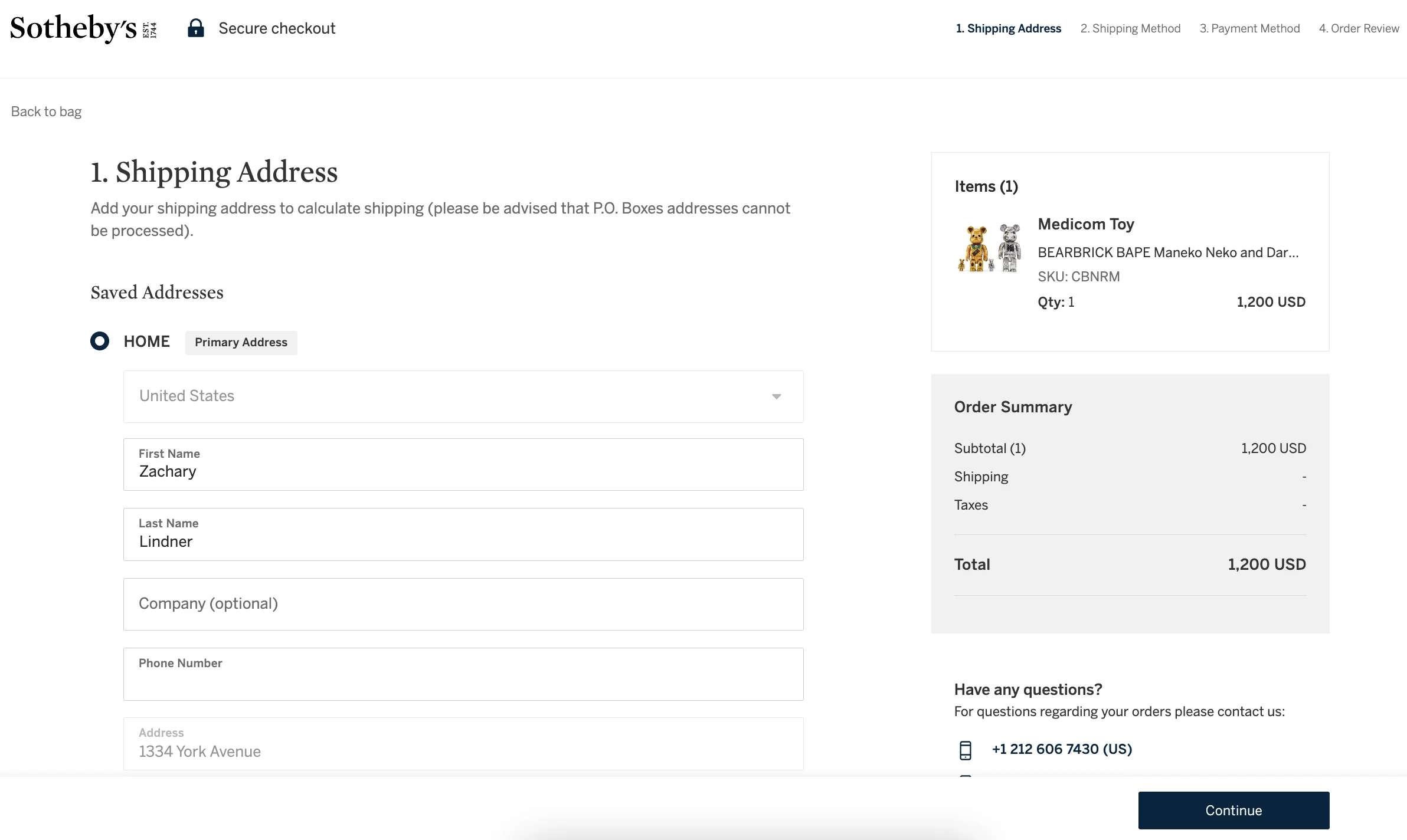
We adapted Viyet’s high-converting cart and checkout for Sotheby’s instead of designing them again. Buyers got a checkout that had already proven itself, and our team could focus on other critical features.
Behind the scenes
Viyet gave us a working store to start from, but it was made for a different audience. We talked with Sotheby’s clients about how they shopped and what they expected, and their answers shaped what we offered and how it looked.
Sotheby’s systems were built to run auctions. We extended them to sell without bidding too, and set up card payments and automatic sales tax, so buyers knew the full cost before they paid.
A year earlier at Viyet, we had launched a cart, checkout and shipping service, and the shipping piece alone saved $1M a year in fees. Sotheby’s had never shipped purchases this way, and its clients were used to white-glove service, so we reworked the shipping rules and added options to meet their needs.
Buy Now required an account to check out. We moved Viyet’s accounts over to Sotheby’s, so its regular buyers could shop the day we opened instead of signing up again.
Sotheby’s had never studied how people used its website, so I added Amplitude. We relied on it so heavily that we blew past the free plan and got locked out. I pushed for a paid one, trained the team and became the go-to person for analytics.
Finally, we shut Viyet down and sent its visitors to the new store.
Two years later